Yara: Transforming the way people work
Customer: Yara Porsgrunn
Industry: Chemicals / Fertiliser production
Company size: ~17,000 employees globally, 700+ at Yara Porsgrunn
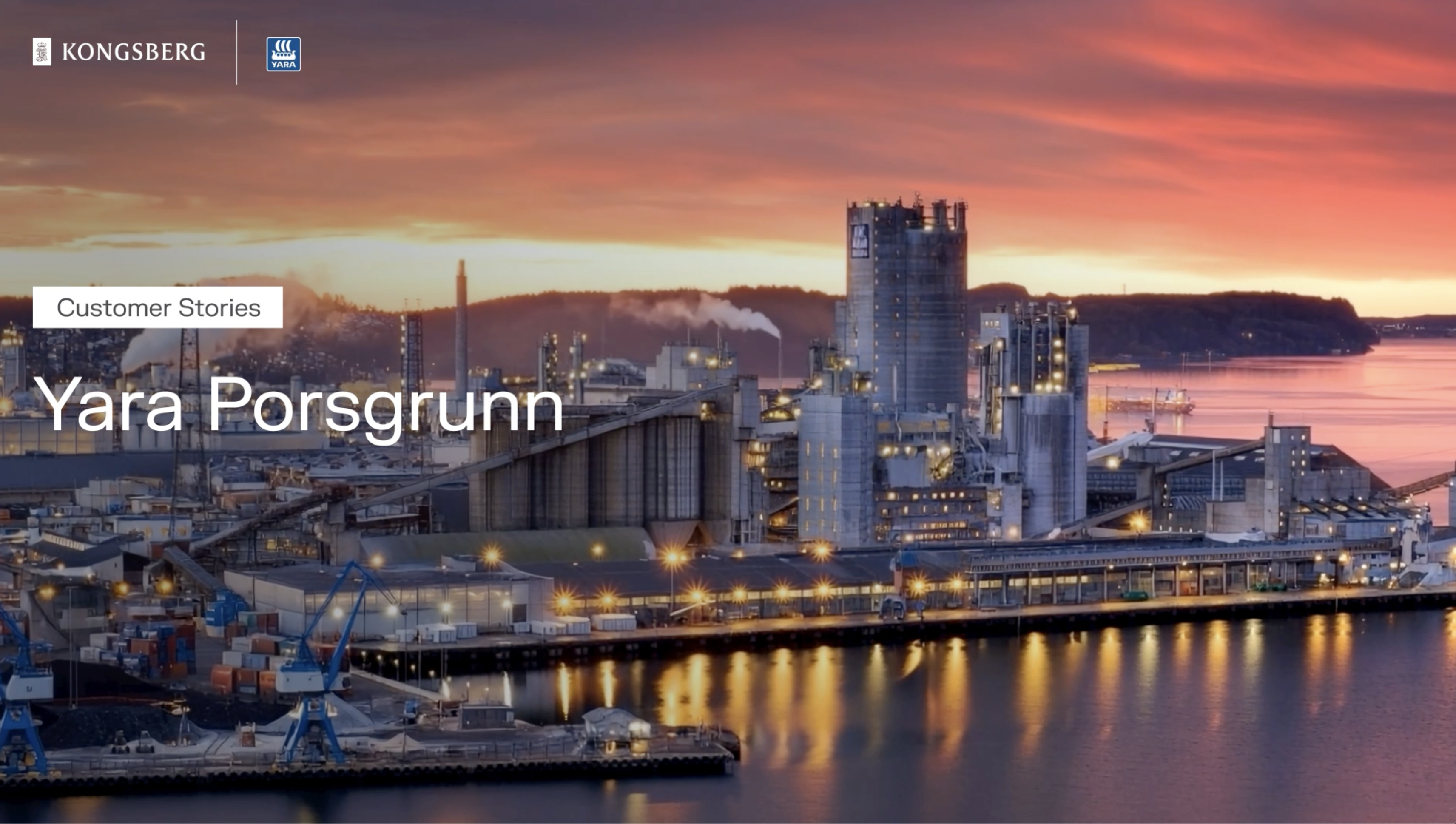
Yara International is a global crop nutrition company with major production facilities located worldwide. In Porsgrunn, Norway, Yara runs one of its largest and most complex facilities, producing fertilisers and industrial chemicals around the clock.
Jump to
1. "Google Maps" style navigation
2. Maintenance and shutdowns with fewer surprises
3. Faster, more confident decisions
4. Effective collaboration with external vendors
5. De-risk shutdowns and turnarounds
6. Fewer field trips and reclaimed engineering hours
7. Phased rollout
8. Time savings, efficiency and accessibility in one view
9. What's next?
Yara is one of the world’s leading producers of fertilisers and industrial chemicals, operating complex, continuous-process plants where safe, efficient, and reliable production depends on quick access to accurate information.
At Yara Porsgrunn, one of the company’s largest sites, thousands of engineering projects, maintenance tasks, and modifications are carried out annually, resulting in large volumes of drawings, models, documentation, and operational data. Historically, this information was spread across multiple systems and archives, making retrieval slow, error-prone, and labour-intensive.
With Kongsberg Digital’s Industrial Work Surface (digital twin), Yara Porsgrunn now consolidates all plant information into a single, intuitive interface. Engineers, planners, operators, and vendors can search for equipment, view 3D models and P&IDs, check maintenance history, and navigate the facility almost like “Google Maps for a process plant.” Maintenance planners can instantly identify access and scaffold needs; shutdown teams can visualise interlocks and prepare isolations earlier; engineers can make faster design decisions with fewer site visits; and external partners can collaborate remotely using high-accuracy 3D scans. The result is significant time savings, reduced backlog, improved reliability, and a modern digital work environment that resonates with new generations entering the plant.
The digital twin is very complex, but it’s easy to navigate and to use.
Terese Hegnastykket, Stop Coordinator, Yara
What Yara wants to achieve
Like many process and chemical operators, Yara’s teams are focused on:
- Planning and executing maintenance efficiently
- Reducing time spent in the field on basic checks and measurements
- Enhancing collaboration across disciplines and sites
- Minimising risks during shutdowns and turnarounds
- Transforming plant data into better decisions faster
A vital part of reaching these goals is the deployment of Kongsberg Digital’s digital twin capabilities across Yara’s plants.
All the information needed to plan, execute, and improve work, such as P&IDs, maintenance history, photos, and 3D scans, is now available in one place.
Below are some examples of how Yara teams utilise the digital twin in their daily work.
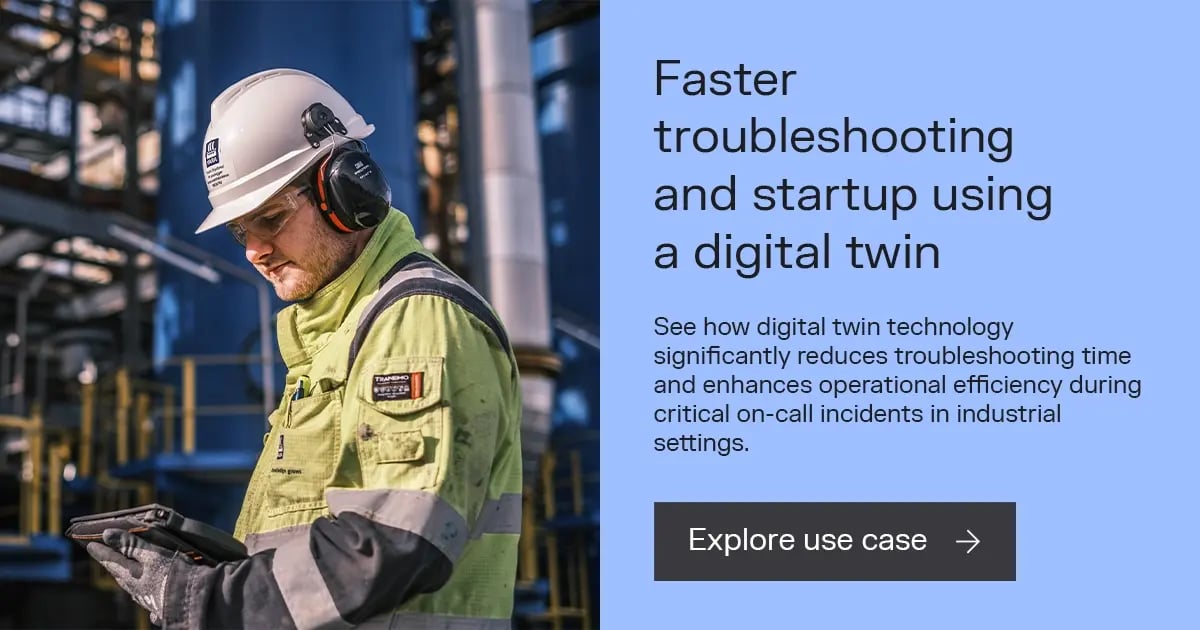
1. Find exactly what you need with “Google Maps” style navigation
With thousands of projects and assets to manage, Yara needed a way to quickly navigate plants without having to jump between systems or search for documentation.
In the digital twin, users can simply search for a tag, zoom into the relevant area of the plant, and instantly view context, documentation, and history all in one view.
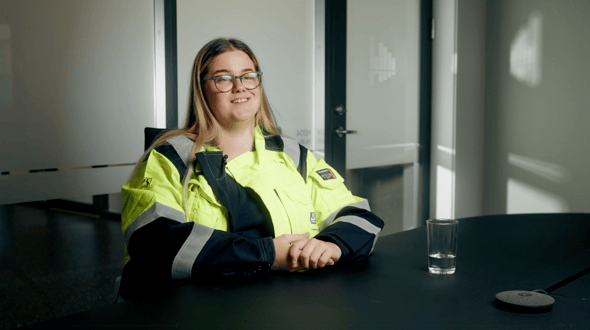
- Browse the plant visually, “like Google Maps”
- Jump from a high-level plant overview into individual equipment
- See P&IDs, photos, notifications and maintenance history in context
You can navigate yourself kind of like Google Maps in the plant.
Terese Hegnastykket, Stop Coordinator, Yara
This simplicity is what drives adoption: people at Yara routinely ask, “Have you tried using the digital twin?” whenever a new question comes up.
2. Planning maintenance and shutdowns with fewer surprises
Every three weeks, Yara Porsgrunn conducts a thorough maintenance planning process. Terese and her colleagues need to understand what each new job entails, where it is located, and what practical requirements it involves. The digital twin is now a key tool in that planning.

Terese Hegnastykket - Stop Coordinator for Operations, Nitric Acid & Utilities
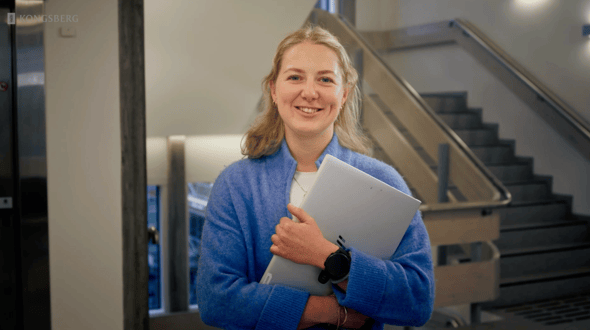
- Locate the precise equipment or area on the 3D model.
- Check for access issues or scaffolding requirements.
- Review P&IDs and maintenance records.
- View photos and documents linked to previous notifications.
This means fewer site visits just to “go and have a look”, and more confident decisions in the planning room.
“Now it’s less ‘we need to check it out’. We can just use the twin.”
Terese Hegnastykket, Stop Coordinator, Yara
3. Giving engineers faster, more confident decisions
For engineers, the initial stages of a project often involve one thing: gathering information about existing equipment and pipelines. Martine used to spend a lot of time searching for data in different systems or visiting the plant to take measurements. With the digital twin, that process becomes significantly simpler.

Marthine Bø - Project Engineer, Yara Porsgrunn
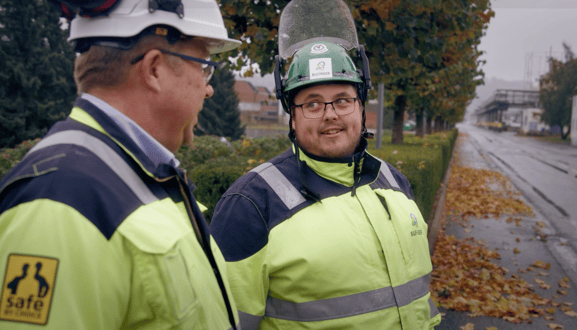
- Pull up equipment and line tags.
- View dimensions and measurements in 3D.
- Access P&IDs, data sheets, and documentation.
- Find historical calculations and compare them to new ones.
With the Digital Twin, it’s easier to collaborate with different teams and with the different plants… we can easily navigate through the Digital Twin together and go through measurements and P&IDs. Then we know that we actually talk about the same equipment and the same pipelines.
Marthine Bø, Project Engineer, Yara
- Fewer visits to the plant just to measure or verify detail.
- Less time spent searching through old paper or digital archives.
- More time available for actual engineering work
This facilitates making design decisions early and ensures everyone stays aligned on exactly which equipment and pipelines they are discussing, even when collaborating across different plants and teams. It also reduces unnecessary site visits and archive searches.
4. Making collaboration with external vendors more efficient
Yara works with external partners on projects and modifications across the plant. For vendors like Trym, having an accurate, accessible view of the facility is essential. The digital twin has transformed how these partners work with Yara.

Trym Fehn Vaa, Mechanical Engineer, Bilfinger
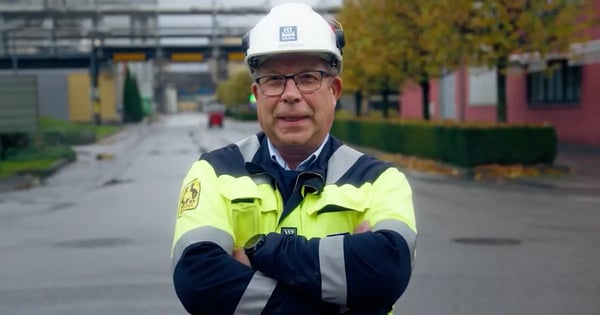
The digital twin helps me make faster and better decisions because it’s much more accessible. You save a lot of time when you’re doing a modification.
Trym Fehn Vaa, Mechanical Engineer, Bilfinger
- Yara can request a 3D scan of a plant area and build modifications directly on top of a highly accurate model.
- 3D scans with “around 5 mm accuracy” underpin planning and design.
- Easily measure areas that are hard or unsafe to access physically.
- Potential improvements upstream or downstream of a modification are easier to spot visually.
Engineers can also use the twin to identify related improvements for example, supporting a pipe better or extending a scope and share those suggestions directly with colleagues during the planning phase.
Instead of standing in a noisy plant area trying to talk over equipment, teams can now sit together in front of the twin or share it remotely over Teams and walk through the scope in detail.
5. De-risk shutdowns and turnarounds using interlock visibility
Shutdowns and turnarounds are some of the most critical and complex events in Yara’s operations.
The twin is especially effective for shutdowns and turnarounds, where risk and complexity are high. By searching tags and using interlock matrices visualised in the twin, teams can quickly see:
- Which interlocks are involved
- Where they appear in the matrices
- What needs to be prepared or isolated in advance
Before, we scanned manually every interlock matrix, and maybe we could overlook something. Now we can just write in the tag, and the twin shows us where in the matrices it is.
Terese Hegnastykket, Stop Coordinator, Yara
By making interlocks and dependencies visual and searchable, the twin helps Yara plan safer, more efficient shutdowns and turnarounds.
Previously, interlock matrices were manually scanned, increasing the risk of missing details. Now, the twin highlights the relevant entries directly, helping the team identify required actions sooner and plan safer, more effective shutdowns.
6. Reduce field trips and reclaim hours across thousands of projects
One of the most significant impacts for Yara is the time saved.
Many of the checks, measurements and verifications that previously required a trip into the plant can now be done from the desktop.
- Less time spent in potentially hazardous environments.
- Less time spent changing clothes, entering the plant and walking to the asset
- Fewer repeat visits just to confirm a measurement or take a photo
- Faster access to the documentation needed to make a decision
It’s hard to say how much time you save because it’s so much… it can be from one hour to five minutes.
Trym Fehn Vaa, Mechanical Engineer, Bilfinger
When this time saving is multiplied across thousands of projects each year, Yara frees up capacity to reduce maintenance backlogs and focus on higher-value work.
7. Rolling out the twin, one plant at a time
Introducing a powerful new tool into a large, complex enterprise with multiple facilities worldwide requires more than just activating new software. Roar has adopted a phased approach: deploying one plant at a time. Each plant has its own history, design, and level of detail.
By focusing on one unit at a time, Roar’s team can:
- Cater to the specific “flavour” of each plant
- Ensure the correct data is captured and linked for that facility
- Train staff systematically, building confidence as they progress
Roar Nilsen - Program Manager Digital Engineering, Yara Porsgrunn

By introducing a tool like this, we found it interesting to do it in a staged manner, one plant at a time… We’ve been able to train people in a controlled way, and we’ll probably do the same for the next plant.
Roar Nilsen, Program Manager Digital Engineering, Yara
This careful rollout is part of why adoption has been so strong. People view the twin as a practical and helpful tool in their everyday work, not just another system. For Yara, the greatest impact isn’t just in one use case, but in how widely the twin is being adopted – across disciplines, projects and day-to-day operations.
“The greatest impact is actually how people are adopting the tool and where they actually have the passion of using it.”
8. Time savings, efficiency and accessibility in one place
Ask Yara’s teams to sum up the digital twin, and the same words keep appearing:
If I have to summarise the digital twin in one word, it might be a boring word, but for me it’s time saving, efficiency and accessibility.
Terese Hegnastykket, Stop Coordinator, Yara
If I’m going to summarise digital twin in one word, it’s efficiency.
Marthine Bø, Project Engineer, Yara
The greatest impact, however, isn’t just in the technology itself it’s in how people use it.
The greatest impact is how people are adopting the tool and the passion they have for using it. All these different use cases actually save us time, and that time saved gives us the capability to take down the backlog. When we take down the backlog, we improve the reliability of the plants, and improved reliability leads to increased production.
Roar Nilsen, Program Manager Digital Engineering, Yara
9. What's next?
By utilising the Asset Copilot embedded in the digital twin, workers at Yara will be able to go beyond simply accessing data to taking intelligent actions, quickly surfacing the right information, coordinating work effectively, and supporting better decisions at scale.
The Asset Copilot transforms plant data into an active layer for decision-making and execution. Intelligent AI agents guide users to what matters most, and support planning and execution workflows across maintenance, engineering, and operations.
Maintenance and operations teams at Yara will be further enabled to shift from manual verification and site visits to AI-supported exploration and decision-making. The outcome is faster planning, reduced operational risk, enhanced execution quality, and increased confidence in decisions across the organisation.